When bats establish colonies inside residential or commercial structures, the consequences extend well beyond occasional nocturnal disturbances. From respiratory hazards tied to accumulated guano to the complex legal protections governing every bat species in Ontario, addressing a bat problem demands precise technical knowledge, strict seasonal awareness, and professional execution. This guide provides the authoritative foundation property owners need to understand bat prevention services, structural exclusion methodologies, and the long-term bat control strategies that protect both buildings and wildlife.
Key Takeaways
- Bats can enter homes through tiny gaps as small as 16 millimetres. Professional bat prevention services focus on thorough inspection, sealing entry points, guano cleanup, and sustained bat control to keep structures permanently secure.
- Accumulated bat droppings, known as guano, can carry histoplasmosis spores and produce strong ammonia odours, making professional remediation critical for respiratory health.
- Structural exclusion timed outside of maternity season (generally May through August) is the safest and only legal way to resolve a bat infestation while protecting common bat species like the little brown bat and big brown bat.
- Effective prevention combines detailed roofline inspections, bat-proof vent covers, chimney screening, and habitat management such as trimming mature trees and optionally installing a bat house away from the building.
- Homeowners should never handle bats with bare hands. If a bat has direct contact with a person or pet, contact wildlife specialists and public health authorities immediately due to rabies risk.
Understanding Bat Problems and Infestations
Bat problems are increasingly common across Ontario cities like Toronto, Brampton, and Guelph, driven by aging housing stock with deteriorating soffits and fascia, combined with the ongoing loss of natural habitats such as old-growth forests and cave systems. As these flying mammals lose access to natural roosts, they seek shelter in the warm, dark voids that urban structures readily provide.
A bat infestation occurs when a colony establishes a persistent roost inside attics, wall cavities, soffits, or chimneys, a situation fundamentally different from a single bat that has accidentally flown indoors through an open window. Infestations involve repeated nightly bat activity, accumulating guano, and structural degradation that worsens with each season the colony remains.
The most common bat species found in urban Ontario structures are the little brown bat (Myotis lucifugus) and the big brown bat (Eptesicus fuscus), both protected species under provincial law. Bats are crucial for agricultural pest control, and they consume thousands of insects each night, including mosquitoes, moths, and beetles. They also contribute to pollination and seed dispersal in broader ecosystems. Bats help control mosquito populations effectively, making bat conservation a priority even as infestations require professional intervention. Bat prevention services focus on long-term bat control and exclusion rather than extermination, aligning humane solutions with conservation goals.
Common Bat Species and Urban Roosting Behaviour
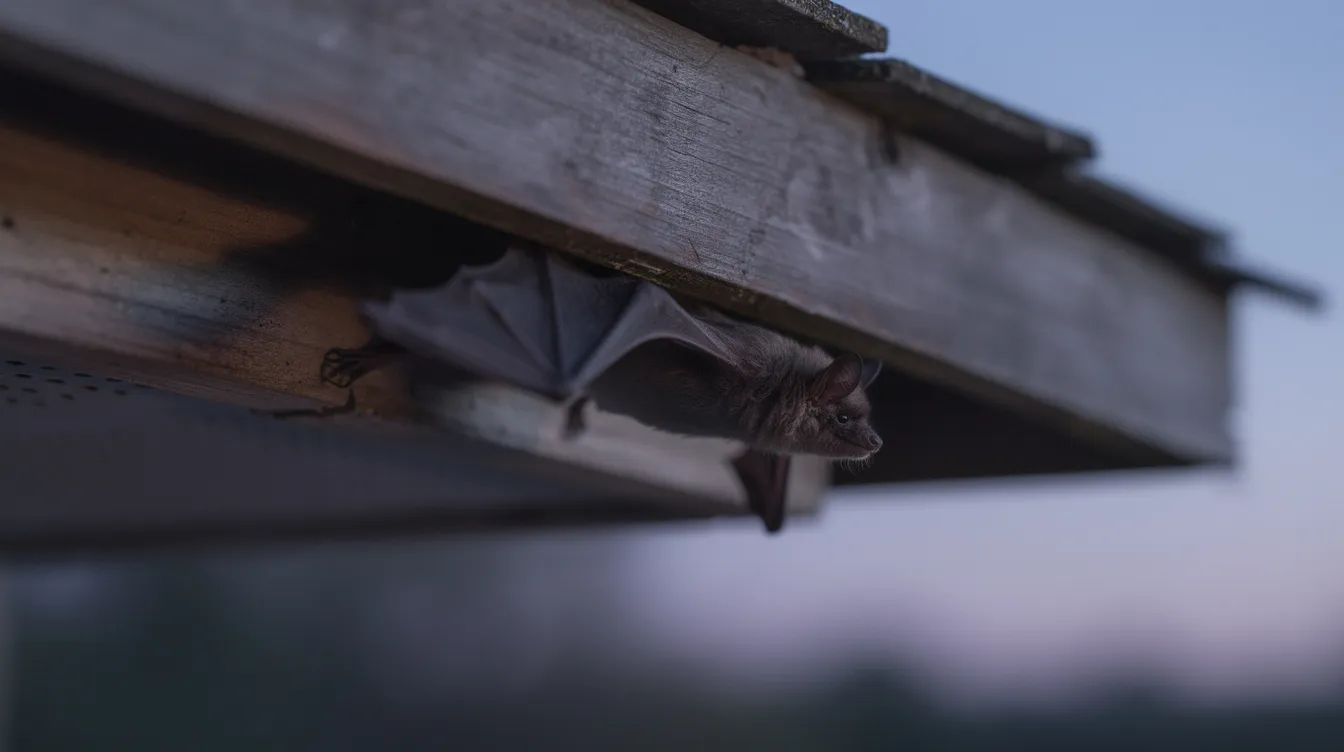
Understanding bat species and roosting biology is essential for designing effective, humane bat removal plans. Brown bats dominate the most common bat species encountered in Ontario buildings, but their habits differ in important ways.
| Species | Colony Size | Preferred Roost | Conservation Status |
|---|---|---|---|
| Little Brown Bat | 20–200+ (maternity colonies) | Attic insulation, roof trusses, wall voids | Endangered (ESA, SARA) |
| Big Brown Bat | 10–50 | Eaves, soffits, chimneys, office buildings | Specially Protected (FWCA) |
Both species exhibit nocturnal roosting behaviours, clustering during the day in warm, dark spaces near heat sources. Bats tend to leave at dusk to feed on insect populations and return before dawn, making these transition windows ideal for observing bat activity and confirming roost locations.
Seasonal behaviour is critical to removal planning. Summer maternity colonies form when females gather in nursery groups to raise flightless pups. Fall brings swarming and mating behaviour near hibernation sites, and winter sees bats entering torpor or full hibernation in attics, wall cavities, or natural hibernacula. These species can squeeze through tiny openings as small as 16 millimetres, which means microscopic entry points along the roofline, eaves, attic vents, and fascia boards are all critical to address. Bats can enter homes through openings as small as roughly one inch, and even smaller gaps may admit juvenile animals.
Health and Structural Risks from Bat Infestations
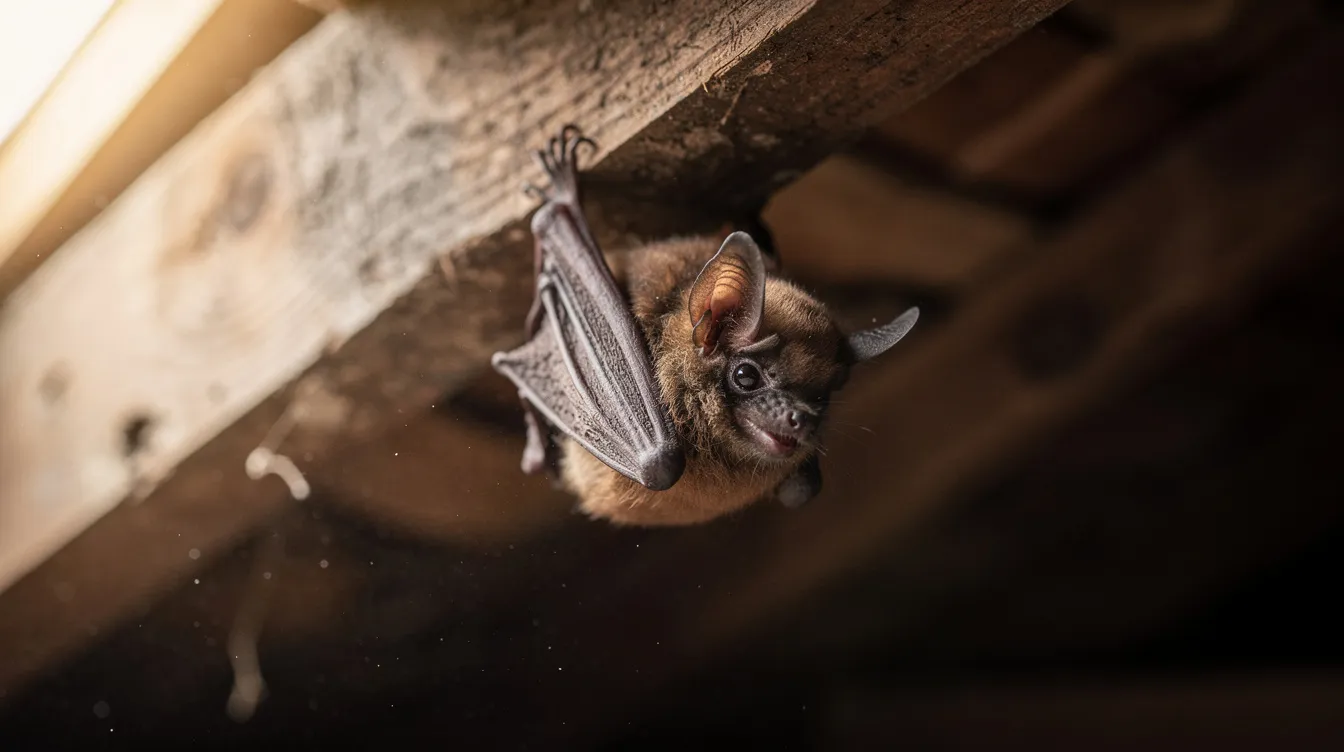
While bats play an irreplaceable ecological role as insect predators, bat infestations inside buildings create serious potential health risks and property damage that escalate with every week the colony remains.
Bat droppings, known as guano, indicate their presence and represent the primary health concern. Bat guano can carry harmful fungi, specifically Histoplasma capsulatum, whose spores become airborne when dried guano is disturbed. Inhalation of these bioaerosols can cause histoplasmosis, a pulmonary infection that poses particular danger to immunocompromised individuals. Bat guano can lead to strong odors and health issues throughout the structure, especially when contamination reaches HVAC systems. Strong ammonia odors from urine suggest bats are nearby, and bat urine can emit strong ammonia scents harmful to health over prolonged exposure.
Bats can transmit rabies, posing health risks to humans. Any direct contact, bite, or scratch requires immediate medical advice, even if the wound from their sharp teeth seems minor. In 2024, two bats tested positive for rabies in Brampton, reinforcing the importance of treating every encounter seriously. Additional problems include bat bugs and bat mites, secondary insect infestations that develop in heavily contaminated affected areas, and structural damage such as saturated insulation, stained drywall, corroded metal flashing, and dark stains on walls that can signal bat activity throughout roof spaces and wall cavities.
How to Recognize Bat Activity and Early Signs of Infestation
Catching early bat activity before a colony becomes fully established dramatically reduces remediation costs and health exposure. Property owners should watch for these indicators:
- Sounds: Nocturnal sounds like scratching indicate bats in your home, particularly fluttering or high-pitched chirping in attics or walls around dusk and just before dawn.
- Droppings: Bat droppings appear as dark, crumbly pellets accumulating along attic beams, window ledges, and below entry points on exterior walls and decks. Unlike mouse droppings, guano often contains visible insect fragments.
- Staining and grease marks: Visible oily residue around small gaps in soffits, chimneys, roof vents, and siding where bats enter and exit nightly, caused by body oils transferred during repeated passage.
- Odour: A persistent, musty ammonia smell emanating from attic openings or wall cavities, intensifying in warm weather.
Observing the roofline at dusk on a clear evening is the most reliable field technique. Watch for bats flying in a steady pattern from a single area, which typically confirms an active roost and differentiates a true bat infestation from an isolated visitor.
Professional Bat Removal Process and Structural Exclusion
Professional bat removal services in Ontario rely on structural exclusion engineering rather than trapping or poisoning, both of which are illegal and ineffective. The humane bat removal process follows a systematic sequence designed to ensure every animal is safely removed without harm.
The standard bat removal process begins with a detailed exterior and attic inspection to locate every active and potential entry point along rooflines, chimneys, vents, masonry gaps, and other entry points. Professionals conduct thorough inspections to identify bat entry points that homeowners routinely overlook. A comprehensive inspection helps identify all entry points, including gaps that may be invisible from ground level.
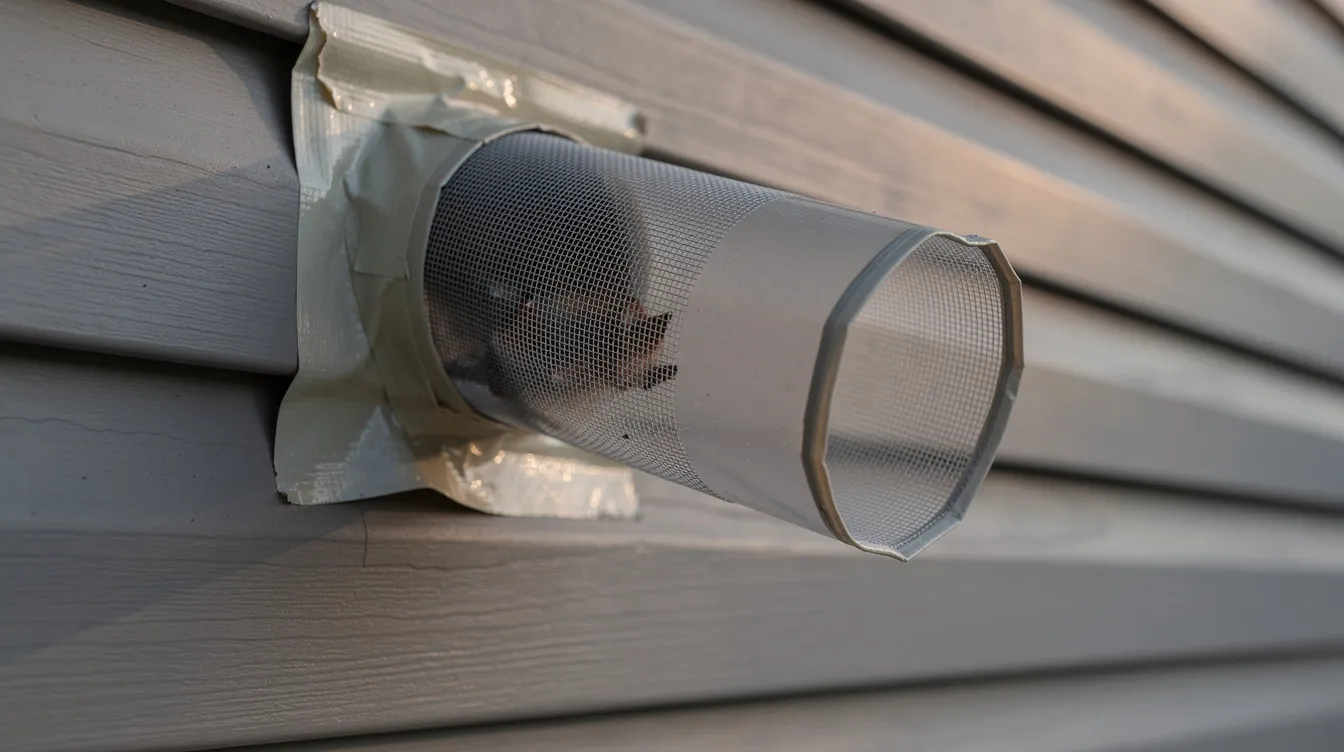
Structural exclusion proceeds by sealing non-active gaps with durable materials, including metal flashing, wildlife-grade caulking, and hardware cloth, while leaving primary exit holes open for controlled bat removal. Technicians then install one way doors or bat cones over the main exits. One-way doors allow bats to exit but prevent re-entry, enabling the colony to vacate naturally during nightly feeding flights. Once monitoring confirms all bat activity has ceased, technicians remove the one-way devices and permanently seal the final access points, completing the removal process. Humane exclusion focuses on preventing bats from re-entering and ensures every animal is safely removed.
Seasonal Timing and Maternity Season Restrictions
Lawful, humane bat control in Ontario must respect maternity season, when young bats cannot yet fly. Exclusion should not occur during maternity season from May to August, as full building exclusions during this window risk trapping flightless pups inside, causing mortality and violating provincial law.
Professionals may stabilize a bat situation during maternity season through interim sealing of non-essential holes, attic containment measures, and careful monitoring, while postponing full exclusion until juveniles can fly. Hibernation and torpor periods (roughly November through March) also complicate timing, as bats may be dormant in wall cavities and less responsive to one-way devices. Bat control professionals often recommend sealing entry points in spring or fall, and homeowners should schedule inspections early in spring or late summer to align prevention work with the safest exclusion windows.
Personal Protective Equipment and Safety During Active Removal
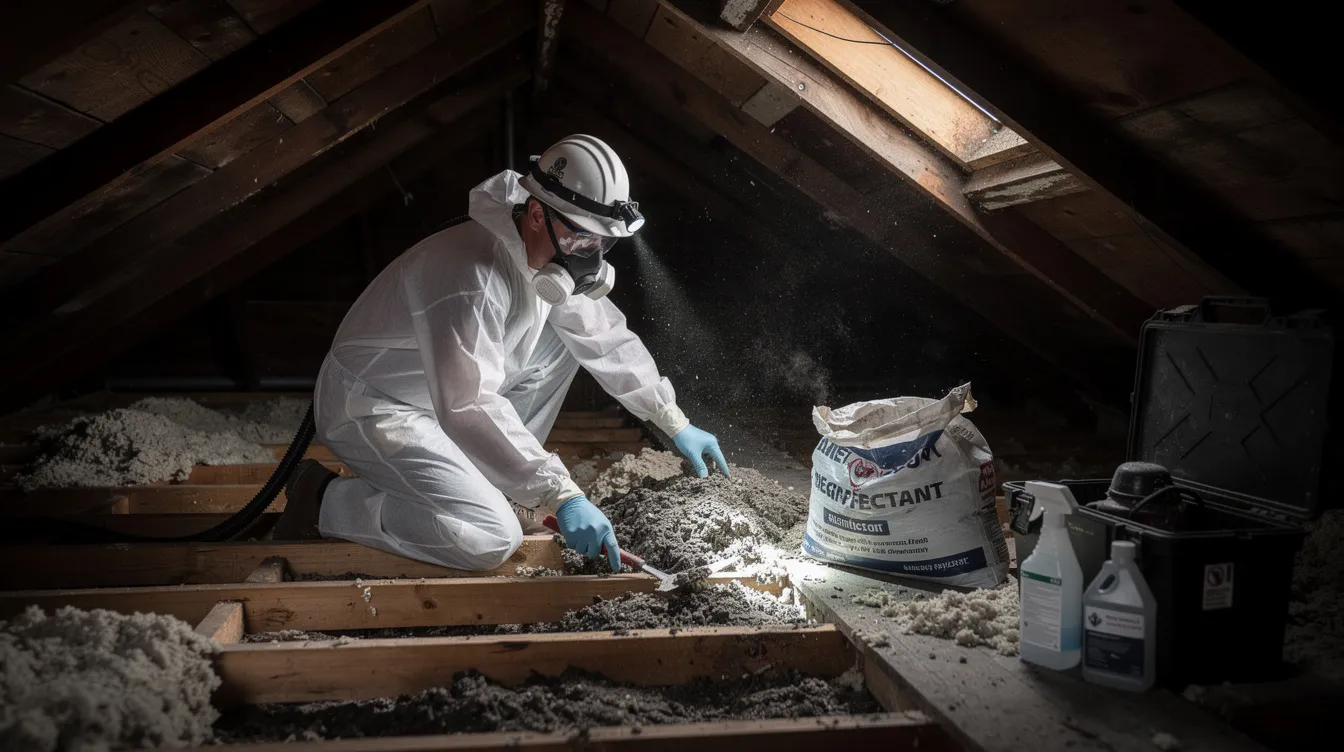
Removing bats should always involve proper PPE and biohazard protocols. Licensed professionals use thick gloves, NIOSH-approved respirators rated for fungal spores, protective coveralls, and eye protection during attic work and any bat handling.
In-room encounters with a single bat require isolating the room, keeping people and pets out, and coordinating with public health before any capture attempts if rabies exposure is suspected. Homeowners should avoid DIY capture of bats roosting in high, confined, or difficult areas, as falls and bites are common without proper training. Certified wildlife control experts follow strict decontamination steps after handling bats, including disinfecting tools and properly bagging disposable PPE to prevent cross-contamination between job sites.
Comprehensive Bat Prevention and Long-Term Bat Control
Bat prevention services are designed to prevent bats from establishing future bat infestations by eliminating access and making structures fundamentally less attractive as roost sites. Sealing cracks and gaps prevents bats from entering buildings, and entry point sealing is the single most important long-term investment.
Key prevention measures include:
- Regular roofline inspections focusing on ridge vents, soffits, fascia boards, chimney crowns, gable ends, and gaps around utility lines where potential entry points develop over time. Regularly inspect roofs and eaves for potential bat entry points, especially after severe weather.
- Bat-proof vent covers and heavy-gauge screens over attic vents and chimneys. Bats often enter through chimneys and vents, so use bat-proof vent covers to secure these areas and seal gaps smaller than half an inch to prevent bat entry.
- Landscape management: Trimming back tall trees overhanging the roof and removing dead mature trees immediately adjacent to the home eliminates launch points that bats use to access rooflines. Improving attic ventilation discourages bats from roosting by reducing the warm, stagnant conditions they prefer.
- Documentation and warranties: High-quality professional removal services provide written reports, photographs of sealed areas, and multi-year workmanship warranties, delivering comprehensive solutions that give homeowners lasting confidence.
Using Bat Houses to Support Bat Conservation
Bat houses can be installed to encourage bats to relocate away from buildings while supporting bat populations and the ecological benefits bats provide. Mount a bat house on a pole or outbuilding at least four to six metres above ground, positioned five to ten metres from the main house in an area with morning sun exposure.
A bat house should only be installed after completing full structural exclusion so bats do not continue using the home as a primary roost. Choose a multi-chamber design sized for local bat species, constructed from dark, weather-resistant materials suited to Ontario’s freeze-thaw climate. Bat houses help offset the loss of natural roosts caused by white nose syndrome and habitat loss, supporting insect control in yards and gardens without creating indoor bat problems.
Guano Cleanup, Odour Control, and Attic Restoration
Guano biohazard remediation is a specialized component of bat removal services and is essential once a colony has been excluded. Bat guano can pose health risks and requires thorough cleanup by trained personnel using appropriate safety equipment.
Professionals assess contamination levels by measuring the depth and spread of bat droppings, urine staining, and damage to insulation and vapour barriers. Safe guano removal involves HEPA-filter vacuums, negative air machines to control airborne spore dispersal, and controlled bagging of contaminated materials. Proper cleanup includes sanitizing spaces contaminated by bat droppings using hospital-grade disinfectants and enzyme-based odour neutralizers.
Attic restoration may require removing and replacing saturated insulation, repairing sheathing gaps, and restoring vapour barriers. Thorough remediation eliminates respiratory risks, removes persistent ammonia odours from affected areas, and prepares the attic for energy-efficient re-insulation.
Legal Protections, Rabies Protocols, and Bat Conservation in Ontario
Bats are protected under Ontario law and cannot be exterminated. The Ontario Fish and Wildlife Conservation Act prohibits killing, poisoning, capturing, or relocating bats without authorization. Fines can reach $25,000 per offence for individuals who employ illegal bat control methods, and penalties increase further when endangered species are involved under the Endangered Species Act.
Several bat species, including the little brown bat, northern myotis, and tri-colored bat, are listed as species at risk, which directly influences permitted humane removal methods and exclusion seasons. Sealing entry points is crucial to prevent future bat infestations, but the method and timing must comply with provincial guidelines.
Standard rabies protocols require contacting local public health units if anyone has had direct contact with a bat. Where instructed, the bat should be safely contained for testing. Professional bat removal services coordinate with wildlife authorities and follow provincial guidelines to protect both homeowners and bat populations.
COVID‑19, Zoonotic Concerns, and Handling Precautions
While bats in Canada have not been shown to transmit COVID-19 to humans, national organizations like the Canadian Wildlife Health Cooperative advise minimizing direct bat handling. Only trained personnel using full PPE should handle bats or enter heavily contaminated attics to reduce any potential zoonotic disease risks. Technicians follow strict decontamination protocols for tools, clothing, and respirators after pest control work involving bats.
Homeowners should avoid disturbing roosts, sweeping dry guano, or using household vacuums in contaminated areas because this can aerosolize harmful particles. Consult local wildlife health advisories for current guidance on safe other wildlife handling and disease monitoring.
Choosing a Professional Bat Prevention and Removal Service
Bat infestations are not a suitable candidate for DIY intervention. The intersection of legal restrictions, biohazard exposure, and structural complexity makes wildlife removal by licensed professionals the only responsible approach. Look for providers with:
- Documented experience specifically with bat infestations and wildlife control
- Training in exclusion techniques and knowledge of Ontario wildlife regulations
- A clearly defined bat removal process including inspection methods, use of one-way doors, guano cleanup, and structural repair capabilities
- Written warranties on exclusion work specifying coverage details and duration for bat control around roofs, vents, and chimneys
- Verifiable testimonials, before-and-after documentation, and established service areas demonstrating a strong track record with bat problems in your region
Whether you need same day service for an urgent bat situation or are planning proactive prevention, selecting a qualified removal service ensures the work is done legally, humanely, and permanently. Humane bat removal services combine professional removal expertise with the conservation-minded approach that Ontario’s protected bat species require.
FAQ: Bat Prevention, Safety, and Next Steps
These frequently asked questions address practical homeowner concerns that extend beyond the core bat removal process. Each answer reflects Ontario-specific regulations, humane bat removal best practices, and real-world timelines.
How quickly should I call a professional if I suspect a bat infestation?
Contact a bat removal specialist as soon as you notice signs like bat droppings, scratching at night, or multiple bats leaving the roofline at dusk. Early intervention, ideally before peak maternity season in late spring, makes exclusion easier and can significantly reduce the cost of guano cleanup and attic restoration. Waiting months often leads to larger colonies, deeper contamination, and more extensive repairs to insulation and structural materials.
What should I do if I wake up and find a bat in my bedroom?
Immediately close the door, keep pets and children out of the room, and contact local public health or a medical professional. Sleeping in the same room as a bat can constitute unrecognized rabies exposure because bats carry rabies and their bites may go unnoticed. Avoid touching the bat. If instructed by health officials, have a professional capture the bat safely for rabies testing. A full-home inspection is commonly found to be necessary after a bedroom incident to check for an underlying colony in the attic or walls.
Does home insurance usually cover damage from bat droppings and guano cleanup?
Many standard home insurance policies in Ontario treat bat infestations and guano damage as maintenance issues rather than sudden events, and may exclude them from coverage entirely. Review your specific policy wording or speak with your insurance provider to confirm what bat-related costs, if any, are covered. Even when insurance does not pay for cleanup, professional guano remediation remains essential to protect respiratory health and preserve property value.
How long does a typical bat prevention and exclusion project take?
Smaller bat infestations in single-family homes may be inspected, excluded, and sealed over several visits spanning a few weeks, depending on bat activity patterns and weather. Complex structures, large colonies, or cases requiring extensive attic restoration can extend the project into multiple phases over one to two months. Timelines are also affected by maternity season restrictions, as some final exclusion steps may need to be scheduled after young bats leave and can fly independently.
Will installing a bat house on my property attract more bats to my home?
A properly located bat house, installed after full structural exclusion and bat proof sealing is complete, does not increase the risk of bats entering the home. When mounted at an appropriate distance and height, bat houses actually draw bats away from the building by offering a preferable alternative roost. They are a conservation tool that must always be paired with professional prevention work to keep interior spaces permanently bat-free and to prevent re entry.

Squirrel Removal, Bird Removal, Raccoon Removal,