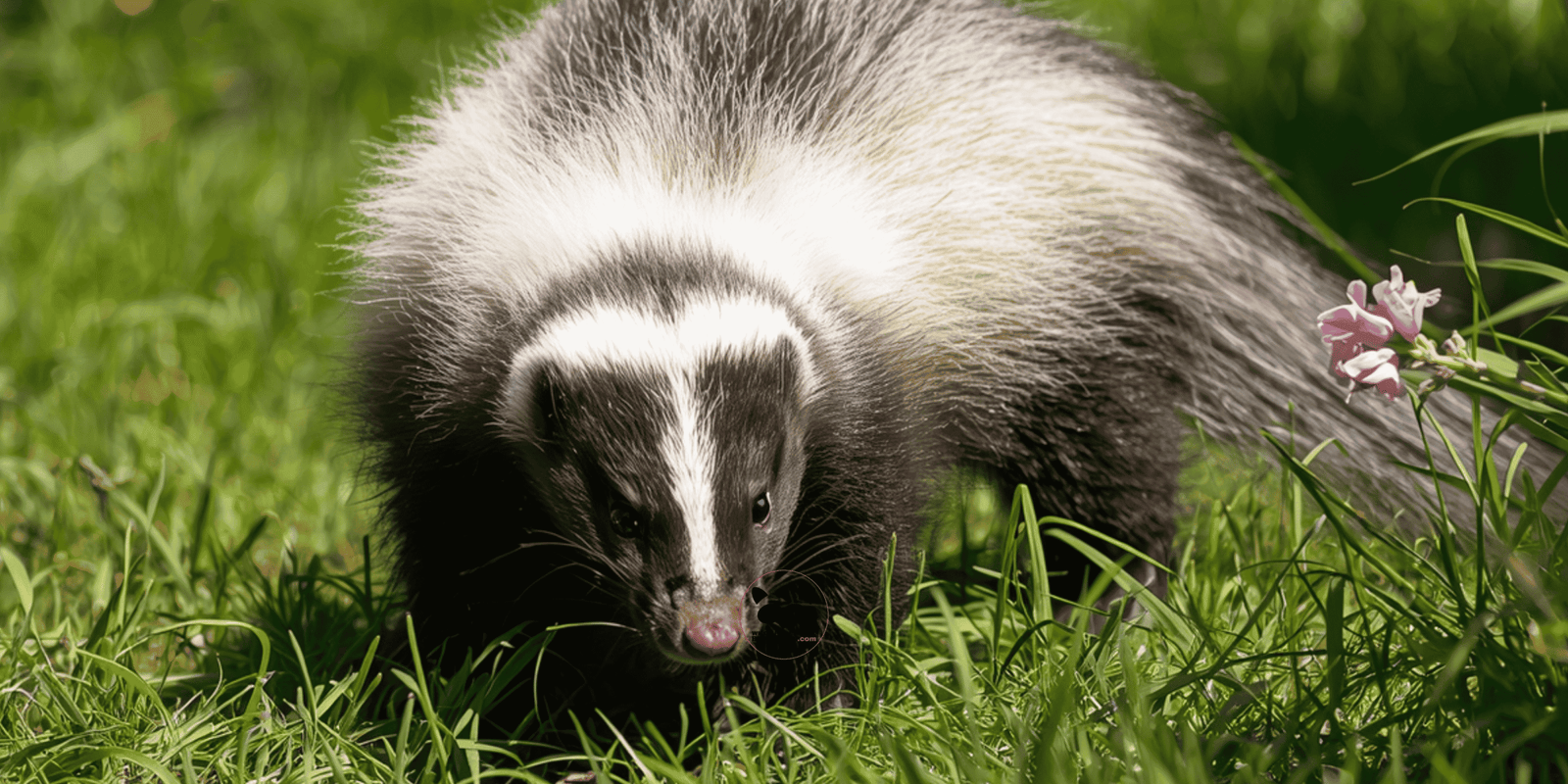
If you have discovered mysterious holes scattered across your lawn or noticed freshly displaced dirt along the base of your deck, porch, or shed, you are dealing with one of the most common residential wildlife conflicts in temperate regions. Animals dig in residential yards seeking shelter or food, and understanding which species is responsible is the critical first step toward effective, humane resolution.
Key Takeaways
- Most digging animals are searching for food sources like grubs, insects, and worms, or seeking safe shelter under structures like sheds, decks, and porches.
- The size and hole shape of the damage – from tiny pencil-size punctures to large burrow entrances – help you identify which animal is digging in your yard.
- Digging damage peaks during spring baby season (April–June) and again in fall, when wildlife prepares for winter.
- Long-term solutions combine food-source reduction (treating your grub problem with beneficial nematodes) and proper exclusion barriers around vulnerable structures.
- A humane wildlife specialist is often necessary when animals are denning under structures or when damage is persistent and expanding.
Why Are Animals Digging in My Yard and Around My Deck and Shed?
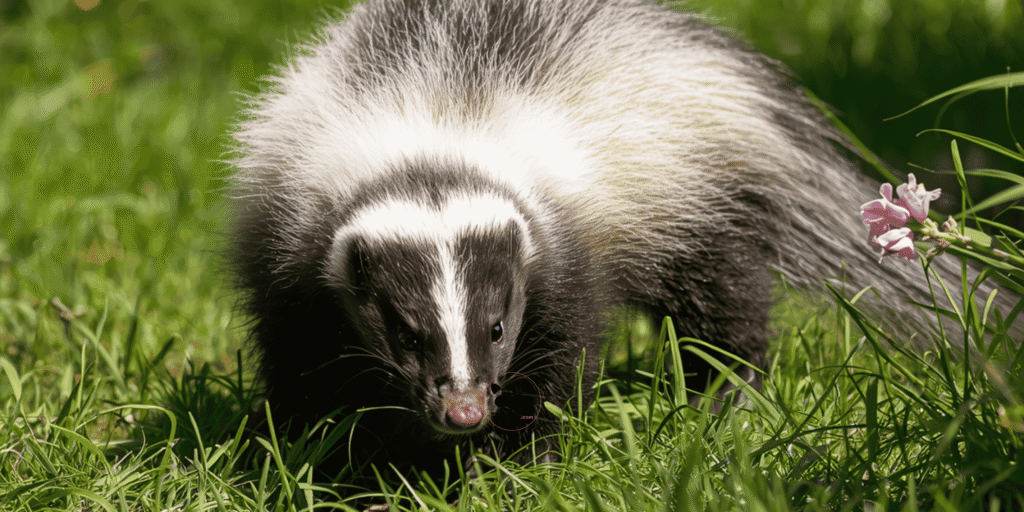
Animals dig for three fundamental reasons: to find food, to establish shelter, and to create nesting sites for their young, pre and post birth. Insect foraging is a primary reason animals dig in lawns – skunks, raccoons, and other animals tear into turf to reach grubs, beetles, and worms just beneath the surface. The dark, quiet space under your deck, porch, or shed offers ideal denning habitat, especially during spring when females are raising babies. Elevated, covered areas block wind, snow, and rain, providing protection for animals from predators and bad weather.
Animals are attracted to structures with easy access to food sources like pet food or bird feeders. Uncovered garbage, compost piles, spilled bird seed, and over-watered, grub-rich lawns all draw digging animals closer to your house. Properly secured garbage and food sources can deter wildlife from encroaching on your property in the first place.
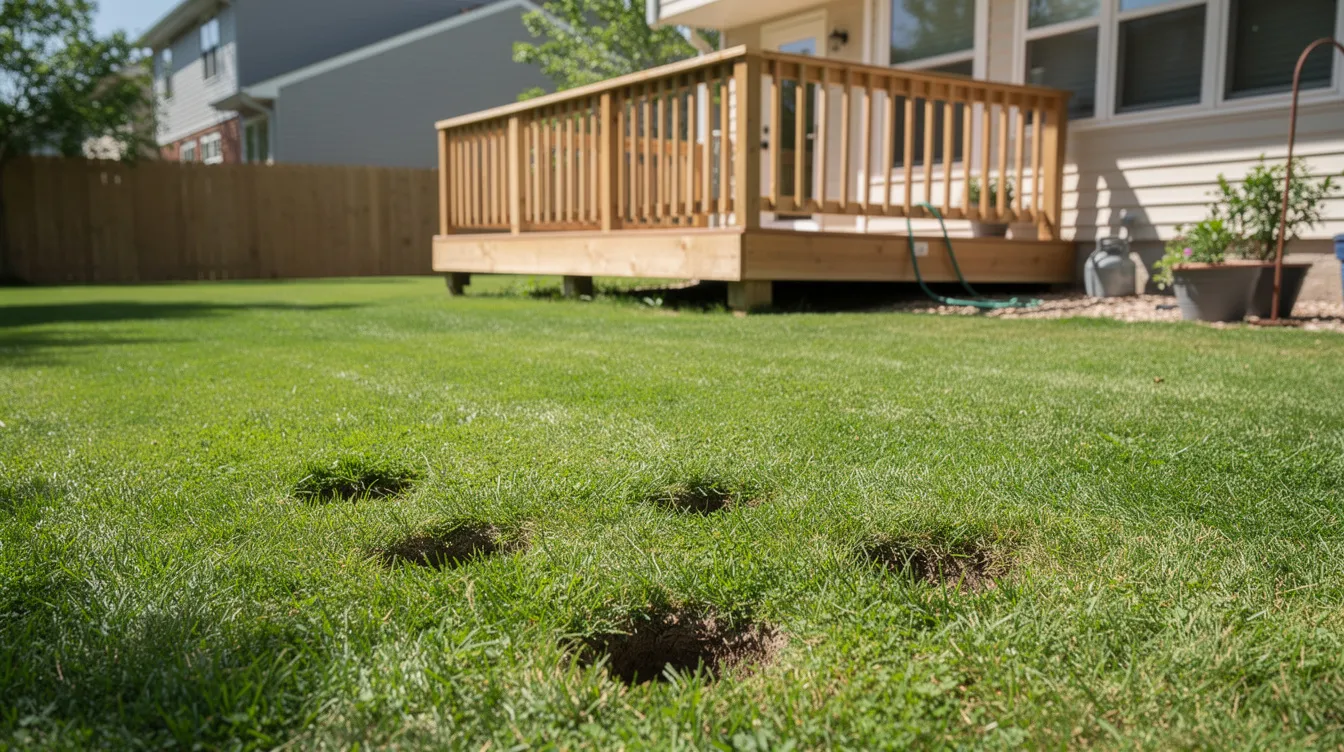
How to Read the Holes: Quick Guide to Identifying What Animal Is Digging
Before you attempt to stop animals from digging, you need to correctly identify the species. Methods that work for moles are ineffective against skunks or groundhogs. Examine hole diameter, depth, whether there is a soil mound or scattered dirt, and whether turf is torn or neatly punctured. Note the location – open lawn, gardens, next to the deck, or under the shed – and when fresh damage appears (night versus day). A game cam positioned near active damage areas can capture the culprit on video, and clear photos of tracks or droppings help a wildlife specialist confirm your identification.
Common Animals Digging Holes in Lawns and Gardens
The most common animals responsible for digging in your yard are typically after food – grubs, earthworms, beetles, roots, and bulbs – rather than trying to establish permanent residence in the middle of your lawn. Common culprits include skunks, raccoons, and groundhogs, though several other creatures also create holes across turf and garden beds.
Moles
Moles dig tunnels to search for earthworms and insects, operating almost entirely underground. They rarely create open holes; instead, moles leave raised ridges – squiggly, elevated tracks pushed up by shallow tunnels just beneath the grass surface. Their signature “volcano” mounds are round piles of loose dirt with a plugged hole beneath. Moles create raised ridges and volcano-like mounds in lawns, and while their tunneling weakens turf and exposes roots, they target soil invertebrates rather than plants.
Voles
Voles (meadow mice) leave narrow, ground-level runways about 1–2 inches wide and many small holes flush with the soil surface. Voles create flush holes with visible snake-like paths across the lawn, most noticeable after snow melt when flattened, brown grass traces their routes. They eat roots, bulbs, and stems, causing dead patches and gnawed bark at the base of shrubs. Because voles reproduce rapidly, early detection prevents widespread damage to lawn and gardens.
Groundhogs and Gophers
Groundhogs are among the most destructive burrowing animals in residential settings. Groundhogs dig 10 to 12-inch diameter holes for burrows, often with fan-shaped mounds of displaced soil outside the entrance. Groundhogs dig extensive burrow systems to raise their young, and these tunnels can extend 20–30 feet beneath gardens, retaining walls, or shed foundations. Pocket gophers create horseshoe-shaped mounds from their burrowing and typically cap their entrances with soil, distinguishing them from groundhog holes. Both species can undermine walkways, slabs, and soil structure beneath hardscape.
Raccoons
Raccoons dig messily to search for insects beneath the turf. Rather than creating neat small holes, raccoons tear up lawns, flipping back grass to find food – leaving shredded sod, scattered clumps of dirt, and large torn patches. This damage typically appears overnight because raccoons feed at night. Raccoons tear into lawns, flipping back grass while foraging, and may also enlarge existing gaps to access the space under decks and sheds. Raccoon litters average 3–5 kits, making spring dens under structures a common problem.
Skunks
Skunks love to forage for grubs and worms just below the lawn surface. Skunks create small, shallow holes a few inches deep – typically 1–3 inches wide – scattered across the grass like a peppering of divots. Skunks dig shallow holes for grubs and worms, and these shallow holes are usually most numerous where grub density is highest. Because skunks are nocturnal, finding fresh, damp soil in those holes early in the morning confirms skunk activity. They may also den under sheds and decks where access is easy.
Chipmunks, Squirrels, and Other Small Rodents
Chipmunks dig small entrance holes about 1–2 inches wide near foundations, patios, steps, or rock walls, typically with little visible mound. Squirrels make shallow holes in lawns and gardens to bury or retrieve nuts, especially in fall and early spring. Scattered shells, nut fragments, or seeds near holes are strong clues that these critters are responsible. Repeated digging by these pests can disturb plant roots and the ground around walkways.
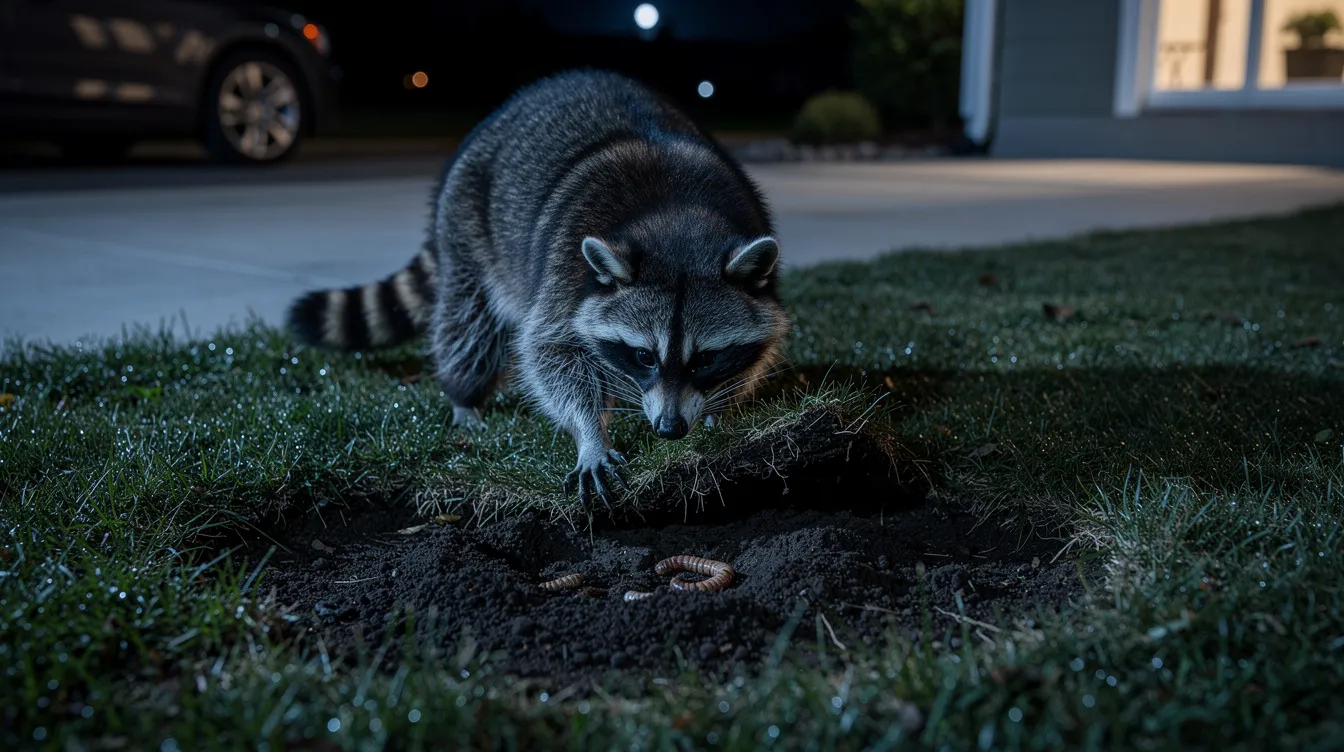
Animals Digging Under Your Deck, Porch, or Shed
Denning under structures is fundamentally different from surface foraging. Decks and sheds provide quiet, dark, and secure areas for animals to build dens – offering stable temperature, protection from predators, and shelter from weather. Animals seek shelter under structures to protect from predators and bad weather, making these locations prime real estate during baby season (April–June). Stones, cinder blocks, or loose boards placed around the edge rarely work because strong digging animals simply tunnel beneath them, and the risks include structural undermining, odor, and dangerous encounters between wildlife and pets.
Skunks Under Decks and Sheds
Skunks choose low-clearance spaces under porches and sheds where predators cannot easily reach them. Signs include a small oval burrow at the structure’s base, musky odor, and scattered shallow holes in nearby lawn. During baby season, faint scratching or squeaking sounds may be audible at night. Blocking skunks in or out without proper assessment can trap babies inside, creating severe odor problems.
Raccoons in Crawl Spaces and Under Porches
Raccoons exploit gaps in lattice, broken vents, or rot along the base of a porch to access the space beneath. Signs include heavy thumping at night, large droppings near entry points, and torn garbage. Raccoon droppings can carry parasites such as Baylisascaris roundworm, so cleanup requires gloves and disinfectant. Homeowners should avoid confronting raccoons directly and contact a wildlife specialist for safe eviction.
Groundhogs and Rabbits Under Sheds
Groundhogs excavate large burrows under shed slabs or skids, creating visible sink spots around the perimeter. Their tunnels can connect multiple entrance holes, including some several feet from the shed. Rabbits sometimes use the shelter of low sheds and decks for surface nests, especially where tall grass or brushy edges provide cover. Repeated collapses near footings indicate significant underground excavation requiring professional inspection.
Seasonal Patterns: When Animal Digging Gets Worse
| Season | Primary Activity | Key Species |
|---|---|---|
| Spring | Nesting, denning, intense foraging for young | Skunks, raccoons, groundhogs |
| Summer | Steady foraging, vole and mole expansion | Moles, voles, raccoons |
| Fall | Food storage, grub hunting, winter shelter prep | Squirrels, chipmunks, skunks |
| Winter | Subsurface activity, reduced movement | Moles, voles (active); groundhogs hibernate |
Digging intensifies in spring when creatures establish dens and feed young, and again in fall when animals fatten up. In late summer, grub populations peak near the soil surface, drawing skunks and raccoons into heavy foraging cycles.
How to Stop Animals from Digging in Your Yard
There is rarely a single fix. Successful control combines lawn care improvements, food-source reduction, and targeted deterrents. Poisoning or random trapping without identification can harm non-target species, pets, and birds, and may be illegal during baby season. Persistent or extensive digging in your yard, especially near structures, warrants calling a humane wildlife specialist.
Improve Lawn Health and Reduce Food Sources
Maintain mowing height around 3–4 inches to shade soil and protect roots. Seeding with Turf Type Tall Fescue strengthens your lawn and improves resilience to damage. Deep, infrequent watering encourages strong root systems. Fewer grubs make your lawn less attractive, though generalist feeders like raccoons may still visit. You can also use chicken wire over digging areas to prevent access while turf recovers.
Use Beneficial Nematodes for Grub Control
Beneficial nematodes are microscopic worms that parasitize grub species in the soil, reducing a key food source that skunks and raccoons rely on to feed. Apply them in spring or late summer when soil is moist and temperatures are moderate. Purchase from reputable suppliers because they are living organisms requiring careful storage. This is part of an integrated approach, not a stand-alone solution to rid your yard of all digging animals.
Repellents, Noise, and Light Deterrents
Commercial animal repellents can temporarily discourage digging animals from specific beds or lawn sections. Repellents should be applied weekly for best results, and reapplication after rain is essential. Motion-activated lights or sprinklers sometimes deter nocturnal visitors but may cause only short-term avoidance as animals habituate. Use deterrents alongside habitat changes and exclusion – never as the only line of defense.
Trapping and Why Professional Help Matters
Setting a DIY live trap to stop animals from digging up your yard poses a major legal and ethical risk. Under the City of Brampton’s Wildlife Removal Business Licensing By-law, urban wildlife management is strictly regulated, making certified professional intervention a necessity.
Humane Exclusion Over Trapping: Licensed specialists prioritize humane exclusion as the default solution. Instead of relying solely on traps, professionals install hands-free one-way doors and commercial-grade steel mesh barriers around vulnerable foundations. This allows animals to exit safely on their own but blocks re-entry—guaranteeing a permanent fix, zero orphaned young, and full municipal compliance.
The Risk of Orphaned Wildlife: Blind trapping often captures a nursing mother, leaving her babies trapped and starving under your deck or porch. This causes immense animal suffering and results in severe, long-lasting odor issues for your home.
Strict Inspection Mandates: Brampton by-laws require that active traps be checked at a minimum of every eight (8) hours, and any captured animal must be humanely released within one (1) hour of discovery.
The 1-Kilometer Relocation Limit: Captured wildlife cannot legally be transported to a distant forest. They must be released within 1 kilometer of the capture site to ensure they remain in the familiar territory they need to survive.
How to Stop Animals from Digging Under Decks, Porches, Sheds, and Fences
Simply filling holes or stacking rocks is rarely effective. The goal is to install barriers that create a continuous, buried perimeter so that digging animals hit solid resistance. Any exclusion work should be timed to avoid sealing in wildlife – a professional inspection during baby season is critical.
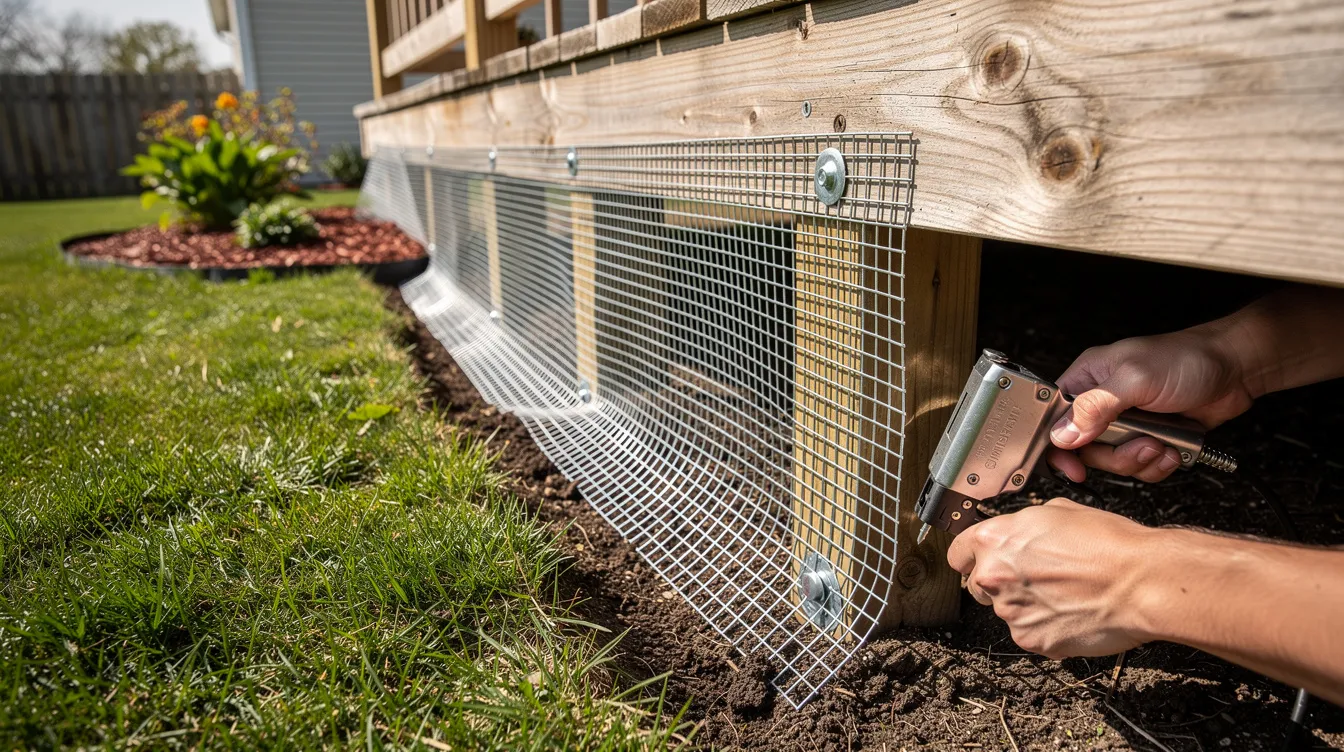
Install an Underground Exclusion Skirt
Attach heavy-gauge galvanized wire mesh to the structure’s base and extend it underground in an L-shape. Bury the mesh 8–12 inches deep (20–30 cm) and extend it 12–24 inches horizontally outward. Mesh openings should be ¼–½ inch hardware cloth to block both large animals and small rodents. Backfill trenches firmly and grade so water drains away from the structure.
Securing Decks, Porches, and Sheds
Inspect all sides for existing entry points, gaps in lattice, missing boards, and soil settling that leaves open gaps. Replace decorative lattice with sturdier materials backed by wire mesh. Install mesh fencing around your shed to deter pests, and ensure wooden sheds on blocks have the perimeter lined with buried mesh. For low-clearance structures, a wildlife specialist with proper tools can trench and install fencing safely.
Stopping Animals Digging Under Fences
Skunks, foxes, rabbits, and even dogs often choose the fence line as the easiest point of entry. Install fencing that extends vertically down from the fence base and bends outward underground to form an L-shape. Walk your fence line regularly to spot and repair any new digging before tunnels become established.
Sanitation, Safety, and When to Call a Wildlife Specialist
Wildlife conflicts involve more than lawn appearance – they carry real safety, disease, and structural integrity risks. Raccoon latrines, rodent droppings, and urine contamination around dens pose biohazard concerns. Always wear rubber or disposable gloves when handling soiled materials, and use dilute bleach solution (15 mL per 1 L water) on hard surfaces. Avoid sweeping dry droppings – lightly wet areas first to minimize airborne dust, then clean and dispose of waste securely.
Call a wildlife specialist when there is repeated digging under structures, suspected babies on site, or when damage threatens foundations, patios, or utility lines.
What a Professional Wildlife Specialist Does
A specialist will inspect the full property – lawn, deck skirting, sheds, fence lines, and known access points at every relevant location. They identify the species, locate active dens, and assess whether young are present before planning any eviction. Humane methods often include one-way doors, timed removal after baby season, and carefully designed exclusion barriers that rid your property of current residents while preventing future entry.
FAQ
Will animals stop digging in my yard on their own if I just ignore it?
Transient foraging from squirrels or skunks may slow as food sources shift, but established burrow systems rarely disappear without intervention. Ignoring repeated digging near decks, sheds, or foundations allows tunnels to expand, increasing repair costs. Monitor for a couple of weeks; if activity continues, contact a specialist.
Is it safe to fill in holes and tunnels myself?
Small, inactive holes in open lawn can usually be filled and re-seeded. Active burrows should never be sealed until you confirm animals are gone. Sealing an occupied burrow – especially under a deck or shed – can trap animals underground, leading to odor, flies, and difficult carcass removal. If you see fresh soil or hear noises from under a structure, consult a professional first.
Can I legally relocate a wild animal that is digging on my property?
Relocation laws vary widely by region. In many jurisdictions, it is illegal to move wildlife more than a short distance or release them on public land. Relocated animals often struggle to survive in unfamiliar territory, which is why humane on-site eviction and exclusion are the preferred approach. Check local regulations or speak with a licensed professional before attempting capture.
Do beneficial nematodes harm pets, people, or beneficial insects?
Beneficial nematodes target specific soil-dwelling pests and are generally considered safe for people, pets, and most beneficial insects. Follow product labels carefully, apply at recommended times and rates, and keep pets off the lawn only as directed during application.
How do I know if it’s baby season and I should delay exclusion work?
In most temperate regions, baby season for skunks, raccoons, and groundhogs runs roughly from April through June. Watch for increased nighttime activity, chirping or squeaking sounds under decks, or adults repeatedly entering the same den. Schedule a professional inspection during these months before sealing any entry point to prevent accidental separation of mothers and young. If you have other questions about timing or species in your area, a local wildlife specialist can provide region-specific guidance.

Squirrel Removal, Bird Removal, Raccoon Removal,